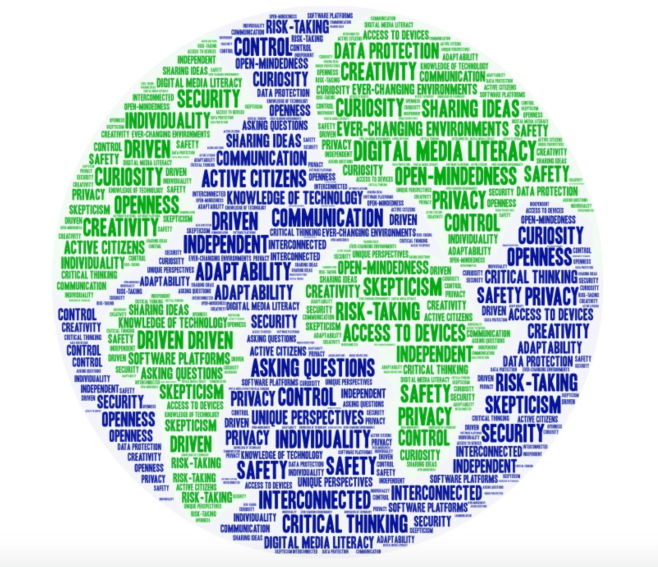
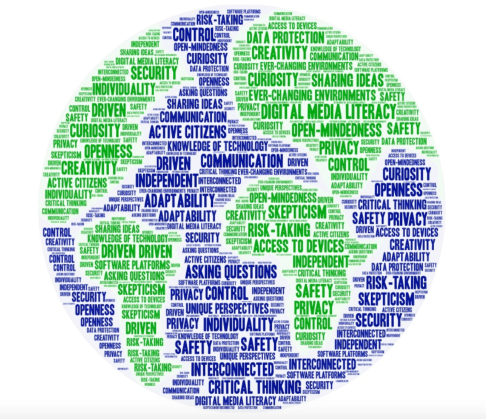
So what is digital media literacy and why is it important? Here is a great snapshot of what digital media literacy is all about in the form of a world cloud. What word stands out to you the most?

So what is digital media literacy and why is it important? Here is a great snapshot of what digital media literacy is all about in the form of a world cloud. What word stands out to you the most?
Greetings fellow bloggers! Whether you’re reading this as a student, teacher candidate, certified teacher, ECE, or principal, I hope this post provides you with some tips on how you can incorporate math manipulatives into your everyday teaching and/or learning.
Over the past several months, I have been in the process of becoming a certified teacher at Lakehead’s Faculty of Education. As you can imagine, my fellow teacher candidates and I are learning about the ‘latest and greatest’ teaching strategies. As you may or may not know, mathematics instruction is one of the hot topics in education right now. Provincial assessments indicate that only 57% of primary students and 69% of junior students are meeting the minimum provincial expectations for math (EQAO, 2018). As a result, there is a huge push on teachers to differentiate mathematics instruction so that all students have the ability to access the information that is being taught. One of the most popular ways to do this is to give students access to hands-on manipulatives when solving problems. Allowing students to use a variety of hands-on materials, such as manipulatives, gives students an entirely different learning opportunity. Students can visualize solutions to the problems, collaborate with classmates, and demonstrate their learning in a way that paper and pencil cannot. Most teachers have access to a variety of manipulatives in their classrooms, but many teachers are not aware of the ways that you can use these manipulatives to teach each of the strands in mathematics. For example, patterning blocks, while commonly used to teach students how to make patterns, can also be used to teach students about perimeter or fractions. If I just blew your mind or you are thinking to yourself “how in the world can I teach fractions with patterning blocks,” then I suggest you continue reading because I will be discussing some strategies that you can implement in your own teaching practice to help students ‘GET’ math.
Here are some of my own tips and strategies that I keep in mind when teaching math!
The biggest mistake that teachers make when using manipulatives is that “their students are too old to play with pattern blocks” or “they already know how to use the hundred’s chart.” ALL students can benefit from using hands-on materials, especially when learning about math. Students all learn in different ways and we owe it to our students to give them multiple different learning opportunities. Besides… the manipulatives are probably just sitting on a shelf in your classroom collecting dust anyways. Bring them out and let students explore!
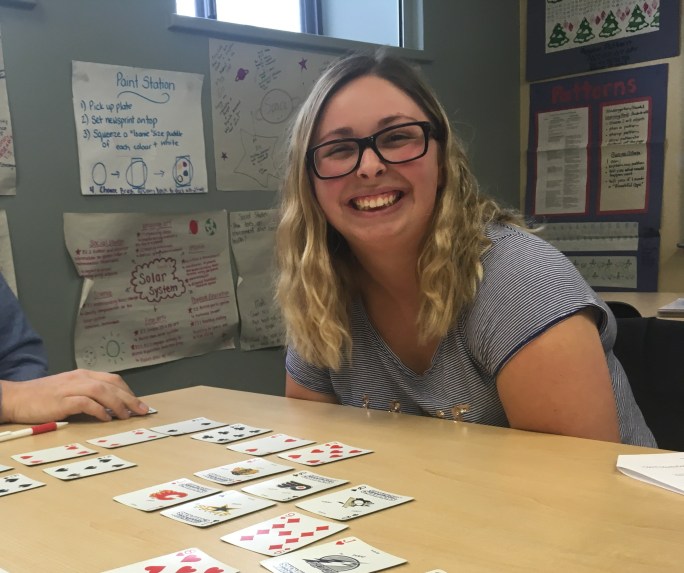
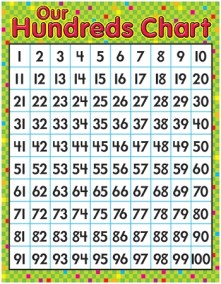
While some students may be familiar with using manipulatives, teachers shouldn’t just assume that their students know what to do when given pattern blocks or a hundred’s chart. As a teacher, you must ensure that you have modelled the correct way to use the manipulative, but you also need to let the students explore and come up with new ways to use the materials to enhance their learning. Don’t expect your students to all of a sudden understand how to count by 10’s because you gave them a hundred’s chart. Manipulatives are an awesome tool, but they aren’t magic. Don’t let them replace your teaching.
Some of the best experiences I had during my course on ‘Teaching Mathematics Instruction’ was when we got to make our own manipulatives. You might be thinking to yourself… why would I waste my valuable teaching time making fraction strips when we already have some in the classroom? I understand that time can be very limited, but having students make their own math manipulatives is time well spent. They will develop deep understandings of why/how the manipulative can help them understand math concepts and on top of that, they will USE them because THEY made them. They will bring them home to their families and share it with them- they will be talking ABOUT MATH… OUTSIDE OF MATH CLASS. And teacher of the year award goes to… you!
Again, you might be thinking to yourself: “we don’t have time to just play.” Take a few minutes during your math lessons to expose students to a variety of different math manipulatives. Let them explore the manipulative in small groups and then have them share with the class what they learned, how they used it, and what they might be able to do with it. Chances are… your students will come up with some really great ideas and they will learn more from this activity than that boring math worksheet you had planned- talk about inquiry based learning!


In order for students to become comfortable with math manipulatives and for them to rely on them when solving problems, students need to be exposed to them regularly. If you only bring the manipulatives out on special occasions, students don’t feel like they have access to them or they ‘feel singled out’ because they need the manipulatives to learn and their classmates don’t. Make them available to students every day and encourage all of your students to justify/prove their solutions using the manipulatives. Not only does this ensure students are double checking their work, but it encourages them to slow down and understand the concepts they are learning about.


Hopefully these tips have inspired you to include manipulatives in your everyday math instruction. If you choose to follow these guidelines, I hope that it will benefit your students’ understanding of mathematical concepts and you will feel much more accomplished as an educator. If you have any other ideas/suggestions, please feel free to leave a comment in the space below!
References:
Education and Quality Accountability Office. (2018). Provincial Elementary School Report, 2018: Achievement Results: Primary Division. Retrieved from http://www.eqao.com/en/assessments/results/assessment-docs-elementary/provincial-report-primary-achievement-results-2018.pdf
Education and Quality Accountability Office. (2018). Provincial Elementary School Report, 2018: Achievement Results: Junior Division. Retrieved from http://www.eqao.com/en/assessments/results/assessment-docs-elementary/provincial-report-junior-achievement-results-2018.pdf
Wow… hard to believe that semester two of my professional year is here and a new year has begun. This week’s blog post is going to examine in depth the benefits of audio recordings within the classroom. Over the past several months, I have been given several opportunities to work with audio recordings and I want to share my insights as to how audio recordings can improve both teacher and student learning within the classroom.
In recent years, the use of audio recordings in the classroom has become an increasingly popular learning tool for both teachers and students. With easy access to electronic devices such as cellphones, tablets, and laptops, audio recordings have never been easier for students of all ages to use to enhance their learning. Audio recordings provide a unique method of learning by allowing teachers/students to record their voices using an electronic device. Because these audio recordings can be saved onto an electronic device, they can be viewed an infinite number of times allowing for teachers/students to reflect, review, improve, and document learning experiences. In addition, audio recordings encourage students to communicate effectively (e.g. tone of voice, fluency, voice level, etc.) and promote critical thinking skills.
So, you might be wondering: How can I use audio recordings in the classroom to enhance student learning? There really are endless possibilities for using audio recordings, or podcasts, in your classroom so I encourage you to use your creativity and teacher lens to design activities that students will find engaging, informative, and fun!
Here are a list of tips/strategies to help you get started!
One of the most important aspects of audio recordings is that students actually enjoy doing them. Regardless of the age of your students, simple programs can be used to make recordings, making these recordings one of the most valuable teaching resources in the 21st century! Below is a clip of a grade 1 class recording their very first podcast within the classroom. As you watch the video, listen to the excitement behind the students’ voices, their confidence in using tech devices, and their wide application to reading, interviewing, and recess!
While podcasts are an incredible tool to be used in the classroom, teachers must keep in mind the privacy and safety issues surrounding audio recordings. Teachers should carefully consider where these audio clips are being stored and where/who they are being shared with. If the recording is shared with individuals outside of the classroom, ensure that the appropriate permissions have been given by the student and his/her parents/guardians. While sharing podcasts and audio recordings can be a rewarding experience for students (and perhaps give them something to work towards because it is being shared with a much larger audience), always be mindful of the safety of your students. Consider having students share their audio recordings through their google accounts rather than websites such as youtube or vimeo.
But remember! Audio recordings are not just for students; teachers can benefit in many ways from using audio to record instructions for students, to learn good communication skills, and become reflection practitioners who strive to improve their teaching practice. Over the last several months, I have had the opportunity to engage in online podcasts with my internship at the Digital Human Library. Feel free to check them out on VoicEd Radio’s website: Click here!
Lastly, I will share with you a brief audio recording that I created with a goal for 2019. Recording myself saying this goal will help hold me accountable throughout the year and remind myself (especially on those days when I need a little uplifting) of why I chose this goal. Consider doing this activity with your own students to set academic, personal, behavioural, or wellness goals! Click here to listen!
Resources:
https://www.edtechteam.com/blog/2018/09/5-tips-for-podcasting-with-students/
This week’s blog post is going to focus on one simple question: Why teach? I often get asked by family, friends, and colleagues “Why do you even want to be a teacher”? Over the last several years, I have been told numerous times that there are “no jobs in teaching” and people often asked “Are you sure you want to spend five years in university to become a teacher”? When I first decided to go to university for concurrent education, I let these conversations get to me because what if I couldn’t get a job? What if these people were right? What was my back-up plan? The truth is, I didn’t have a back up plan. I was going to be a teacher and I wasn’t going to let anything get in the way of my dreams.
Fast forward to 2018, I am now in my fifth year of university in my professional year and am so close to the finish line. In just a few short weeks, my peers and I will be heading out to our first placement. While this brings a lot of joy and excitement to our lives, it is without a doubt that we are all feeling a little nervous. As we prepare ourselves over the next few weeks, it is important that we remember why we chose this profession. If ever you are doubting your success as a teacher candidate, think of all the reasons why you chose this career. During these busy last few weeks, it is important to remind ourselves (myself included) why we chose teaching as a career. Nobody ever said that this profession was easy, but it is definitely going to be worth it.
So why did I choose teaching? All my life I have been a dedicated student, I tried my best for every single test, project, and assignment. However, throughout my education, I have seen a number of peers, classmates, and family members struggle throughout school. At the time, I didn’t understand how anybody could hate school so much because for me, it has always been enjoyable. But as I got older, I noticed that these negative feelings towards school are not unique; many students feel this dispassion and feel that learning is a waste of their time. My passion is to change the way students view education so that every student finds something in education that they love. It doesn’t have to be a love of math, reading, or even science. I want to inspire students to find what it is they are passionate about in life and bring that into their education through hands-on learning. After all, if we can’t make learning meaningful to a student, they are not going to find meaning in their education.
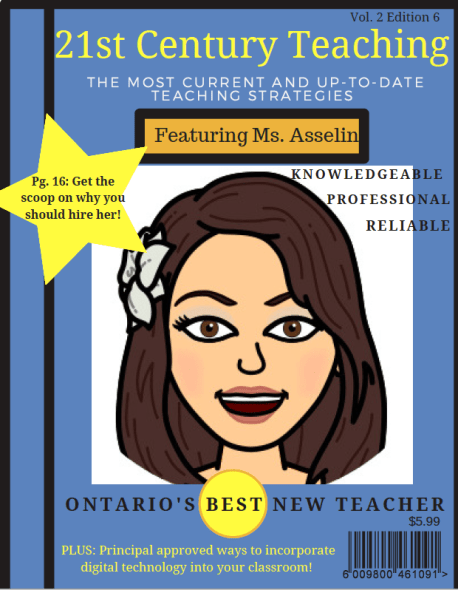
In my media class last week, we each designed a magazine cover that ‘sold who we are as educators’ so that potential school boards and principals would want to hire us. Our task was to showcase our credentials, our skills, and our personalities so that potential readers would A) purchase the magazine and B) want to read the magazine to find out more about us. So how would I bring this activity into the classroom?
I believe that students and teachers must develop positive relationships within their classroom and in order to do this, the teacher must spend some time getting to know each and every student. A great way to do this is to have students create their own magazine covers that showcases who they are, what their special talents are, their favourite tv shows/movies/books, any sports they do, family members, etc. While students can do this with pen and paper, why not step it up a notch and use technology! The platform I used was canva (which requires an account), however there are many other free websites that students can use to create their own magazine covers such as Big Huge Labs or Fake-a-zine! This cross-curricular activity incorporates digital literacy (language) and art and would be suitable for upper primary and junior grades.
Rita Pierson, a professional educator and inspirational speaker, summarizes my philosophy of education in one very simple sentence: “Every kid needs a champion” (Pierson, 2013). As a teacher candidate, I want the students I am working with to learn and be successful, but in order for students to become the best they can be, the teacher must create a positive learning environment. Have you ever heard a student who isn’t fond of their teacher come home and say they had a great day at school and learned so much that they can’t wait to go back? Not likely. On the other hand, ask a student who loves their teacher how their day at school was and they likely won’t stop talking about the activity they did during math or the game they played during language arts. Rita Pierson suggests that “Kids don’t learn from people they don’t like” (Pierson, 2013). Although this is a very harsh statement, it is absolutely true that teachers frame the classroom atmosphere and it is up to the teacher to develop a positive learning environment where students will thrive. While this isn’t necessarily a recipe for student success, it is a reminder for teachers and educators to take a step back from the curriculum once in a while and understand that there is much more to this profession than just teaching the curriculum. The teacher must develop positive student relationships and interactions so that students feel comfortable making mistakes, exploring new concepts and strategies, and taking risks because “Every kid needs a champion” (Pierson, 2013).
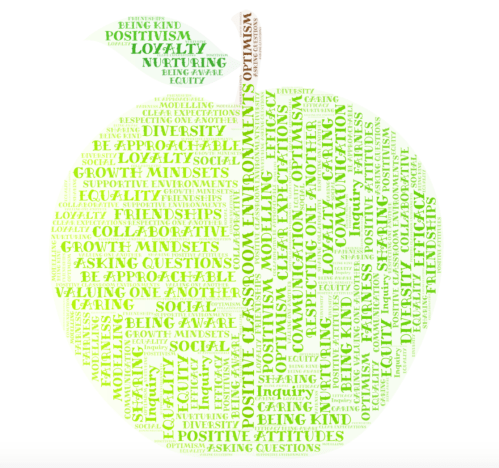
So how do educators develop positive environments for students in the classroom? There are many aspects that contribute to the learning atmosphere and both the students and teachers are responsible for ensuring that the classroom dynamics are positive and contribute to the success and growth of every student in the class. Below is a word map created using Word Art that outlines the characteristics that I think are important to develop for a positive learning environment!
As we all wrap up our seventh week in the Faculty of Education, I encourage all of my fellow candidates to remember why we chose this profession. You are going to make a difference in the lives of so many students. Enjoy every minute that you are in the classroom; inspire, educate, learn alongside, engage, and ask questions. Remember that you are on a journey; shine bright, be confident, and make the most of this experience.
Why did you decide to become a teacher? Did anybody ever question why you wanted to be a teacher? Leave a comment in the space below!
References:
TED Talks. (2013, May 3). Every kid needs a champion | Rita Pierson [Video file]. Retrieved from https://www.youtube.com/watch?v=SFnMTHhKdkw
This week will mark the end of week five in the faculty of education and I cannot believe how quickly time is flying by. It feels like just yesterday we all nervously entered the school and began this wonderful journey. Looking back at that first week in September, I realize how much we have already learned about the profession of teaching and how much we have yet to learn.
This year I am very fortunate that I have the opportunity to be an intern for the Digital Human Library. Rebecca and I are working on a variety of fun and exciting projects, including the design of a networking curriculum…. and this is what I am going to discuss in today’s blog.
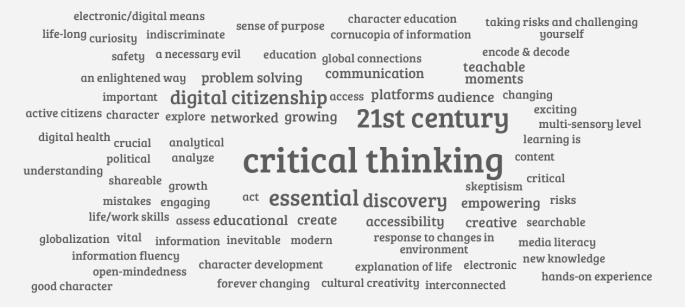
During the first day of MDL 4000, we were all asked to think about what digital media literacy is and then put our answers in an answer garden. Below is what our class came up with and I must say, after delving into the research regarding media and digital literacy, we actually knew more than we thought we did!
So in order to design a networking curriculum for the Digital Human Library, Rebecca and I were first tasked with finding out: What exactly is networking and why is it important? What skills will our students be learning by participating in various networks and how does this relate to the curriculum?
Below is a small list of some of the advantages of networking in the classroom:
During week 2, each of us were asked to design a wordle with a collection of words that represented what digital and media literacy was to us. Here is a snapshot of mine in the formation of the earth; I selected this shape as a way to represent the interconnectedness between individuals through the use of digital media.
So as you can see, Digital Media Literacy is a huge topic and it may not be an area that new teacher candidates feel entirely comfortable teaching because this is a fairly new style of teaching that most of us were not exposed to when we were in school. Hopefully you recognize the importance of incorporating digital and media literacy within your own classroom and the impact this can have on the development and success of your students! There are endless possibilities of incorporating this into your classrooms and you should not feel limited because you do not have the technology available. Take your children on an adventure walk and take pictures of all of the 90 degree angles you see or all of the different types of plants you can find (watch for poison ivy!), Skype a classroom from up north to learn about what their life/community is like (A Kids’ Guide to Canada) or take part in a digital storytelling project. Your students will be so excited that they have the opportunity to have fun, be creative, LEARN, and collaborate with other students and they will remember these activities years after they have completed it.
“Education is what survives when what has been learned has been forgotten”
~B.F. Skinner~
If you are interested in connecting your classroom to communities across Canada, check out A Kid’s Guide to Canada, an initiative founded by Leigh Cassell and Cathy Beach that allows students to make an impact on Canada by creating “the first multilingual, multicultural and interactive guide to Canada made by kids and for kids” (A Kids’ Guide to Canada, 2017).
Resources:
A Kids’ Guide to Canada. (2017). Retrieved from https://akgtcanada.com.
Blazer, C. (2012). Miami-Dade County Public Schools: Social networking in schools: benefits and risks; review of the research; policy considerations; and current practices, v.1109. Retrieved from https://files.eric.ed.gov/fulltext/ED536527.pdf
McCarthy, J. (2018). Edutopia: Tech integration in blended learning. Retrieved from https://www.edutopia.org/article/tech-integration-blended-learning
Vanessa, V. (2013). Edutopia: Technology Integration Research Review: Additional Tools and Programs. Retrieved from https://www.edutopia.org/technology-integration-research-tools-programs
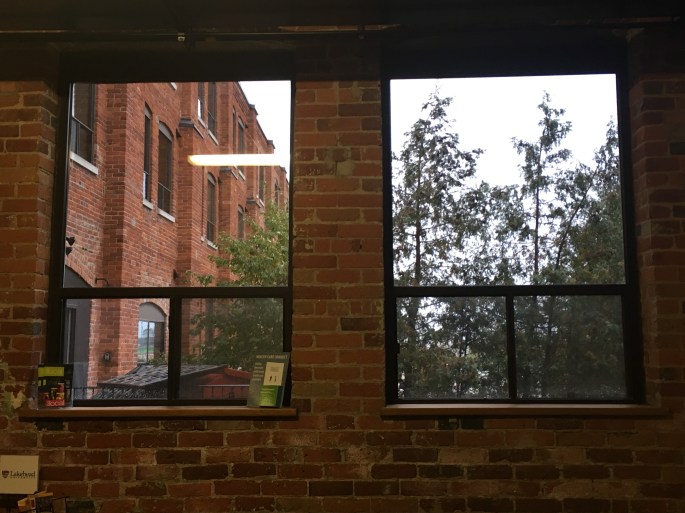
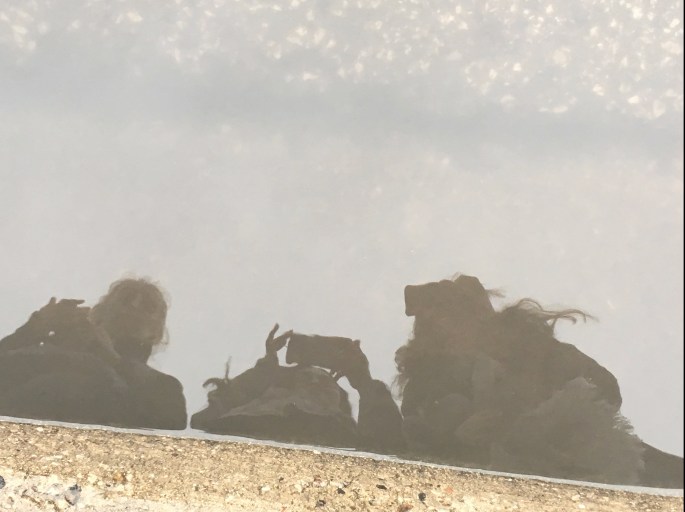
Emily Asselin, A Rainy Day, Creative Commons.

This work is licensed under a Creative Commons Attribution-NonCommercial-ShareAlike 4.0 International License.

Today in MDL4000, we created memes! What a fantastic way to relieve some stress and have a few great laughs as we wrap up week 4 already! For my meme, I used the meme generator called IMGFLIP but there are many other ways to create a meme using Livememe, Quickmeme, and Google Drawing. If we were going to design memes in the classroom with our students, we would stick to Google Drawing for the simple reason that students have access through their google accounts and it is a much safer way to control the types of memes that students are designing. Be sure to remind students that images they are using should not have copyright licenses attached. Use websites like pixabay or unsplash for images that are copyright free.
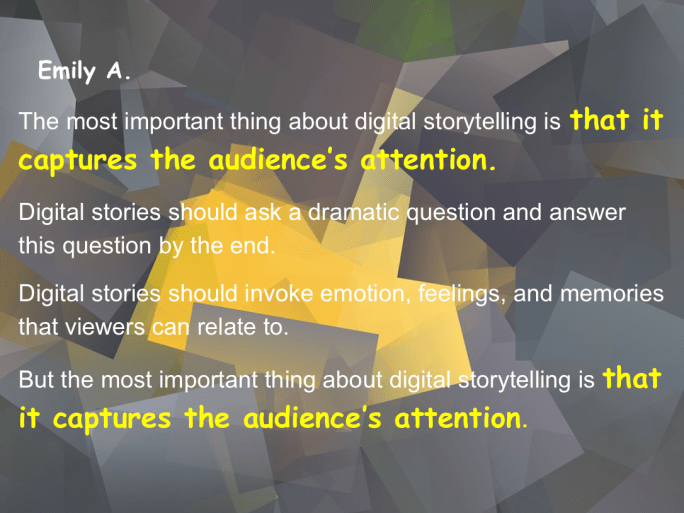
This week in our digital media literacy class, we read the The Important Book by Margaret Wise Brown. After we read the book, each of us created a powerpoint slide that followed the same pattern from the book:
The most important thing about digital storytelling is that….
….
But the most important thing about digital storytelling is that….
After we each created a slide, we put them all together to create our own book!
While we used the topic of digital storytelling, you can use this book to relate to science, math, language, art, etc. in your classroom and it is a great way to get students using media!
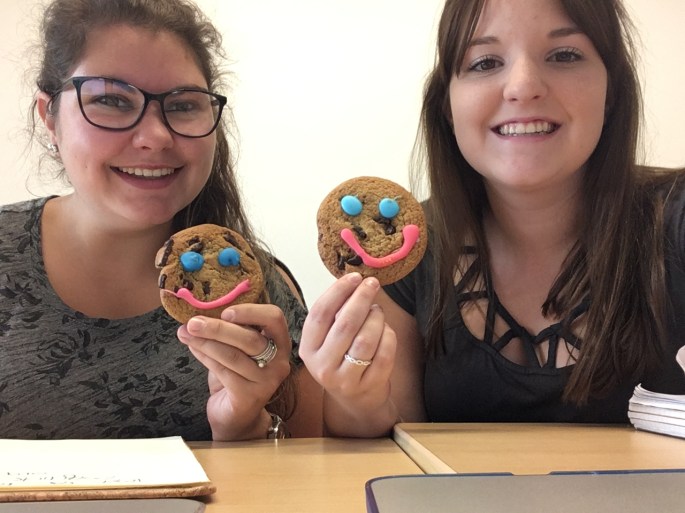
Have you been to Tim Hortons this week to purchase a smile cookie? All funds raised go towards supporting your local community hospital. Rebecca and I worked on our internship today while enjoying a delicious chocolate chip cookie.
How will you teach your students about the importance of supporting our local community?


 Ms. Asselin's Educational Blog